Cross-platform app development is becoming a popular choice for businesses looking to build high-quality mobile applications for Android and iOS without maintaining entirely separate codebases. With technologies such as Flutter, React Native, and .NET MAUI, businesses can streamline development, maintain consistent user experiences, and bring digital products to market more efficiently.
In 2026, cross-platform mobile app development continues to evolve with AI integration, improved performance, modern UI/UX design, and cloud-connected applications.
Top Cross-Platform App Development Trends
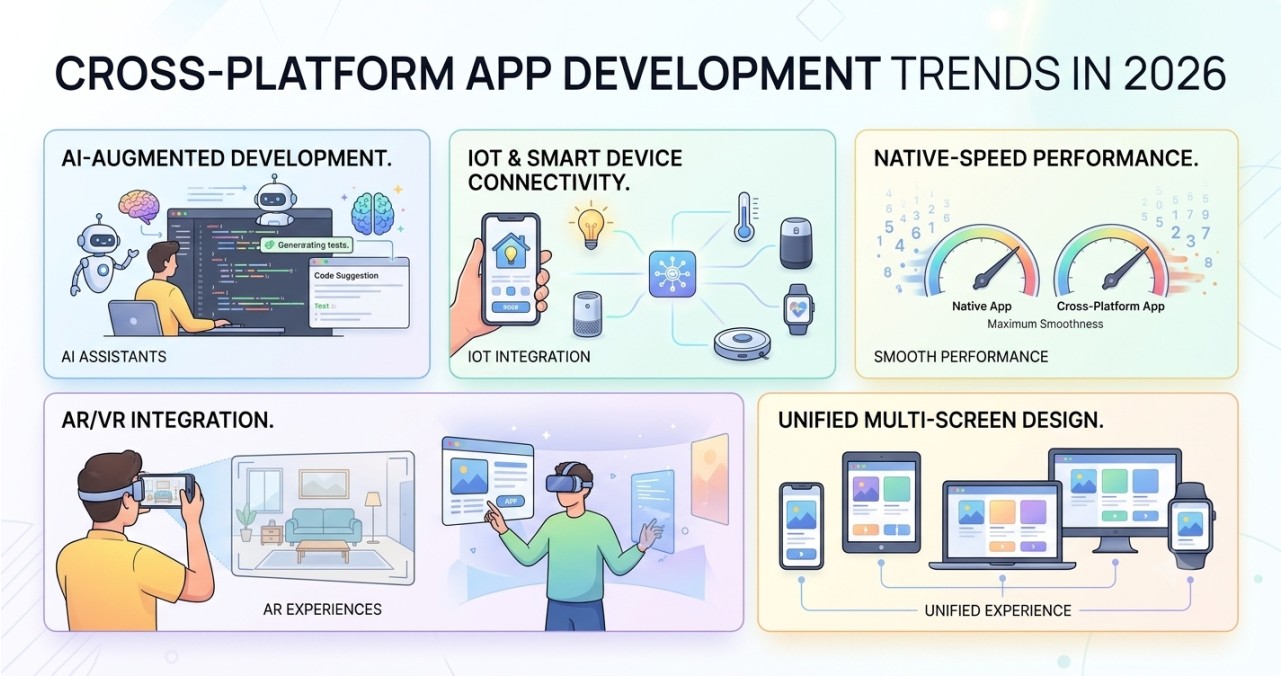
1. AI-Powered Mobile Applications: Businesses are integrating AI chatbots, virtual assistants, personalized recommendations, and intelligent automation into cross-platform apps to improve user engagement.
2. Flutter and React Native Advancements: Flutter and React Native remain important frameworks for developing feature-rich Android and iOS applications with shared code and increasingly capable native integrations.
3. Better Performance and Native-Like Experiences: Modern cross-platform frameworks are improving rendering, responsiveness, and access to device features, helping developers deliver smoother app experiences.
4. Cloud-Based App Development: Cloud services enable scalable data storage, real-time synchronization, backend integration, and easier management of connected mobile applications.
5. Enhanced Security and Privacy: Secure authentication, data encryption, permission management, and privacy-focused development are essential for protecting users and business information.
6. Wearables and Connected Devices: Cross-platform apps are increasingly being designed to work with connected devices and selected wearable technologies, expanding their use across industries.
7. Modern UI/UX and Accessibility: Responsive layouts, intuitive navigation, accessibility features, and consistent design systems help businesses deliver engaging experiences across different screen sizes.
Benefits of Cross-Platform App Development
Cross-platform development can reduce duplicated development effort, simplify maintenance, improve code reuse, and help businesses reach users on multiple platforms. However, the right framework depends on application complexity, performance requirements, device integrations, and long-term business goals.
Conclusion
Cross-platform app development is helping businesses create scalable, user-friendly mobile applications while optimizing development resources. By adopting modern frameworks and integrating AI, cloud services, and strong security practices, organizations can build mobile experiences that meet evolving customer expectations.
Tamesa Tech offers mobile app development and cross-platform development solutions to help businesses turn ideas into reliable digital products for Android and iOS.