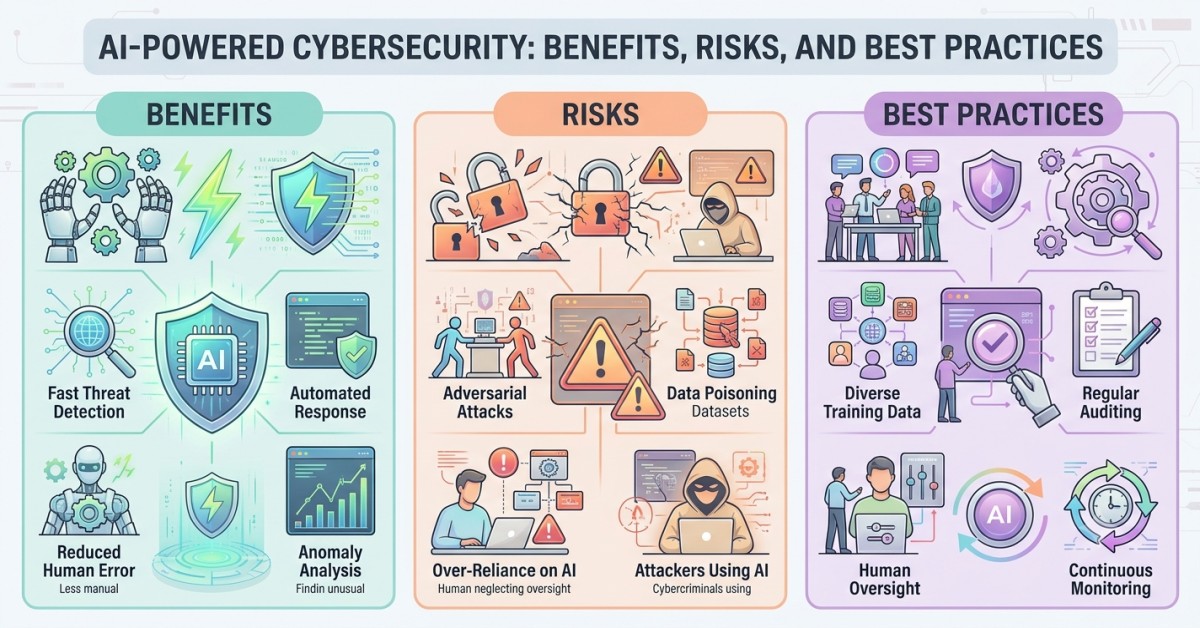
AI-powered cybersecurity uses artificial intelligence and machine learning to identify suspicious activity, detect potential threats, analyze security data, and support faster responses. For businesses investing in AI development and digital transformation, it offers new opportunities to improve security while managing operational risks.
What Is AI-Powered Cybersecurity?
AI-powered cybersecurity uses AI algorithms and machine learning to help detect, prevent, and respond to cyber threats. It can analyze network activity, identify unusual behavior, flag potential vulnerabilities, and automate selected security tasks.
Businesses can apply AI security solutions across websites, mobile applications, cloud platforms, enterprise software, and connected business systems.
Benefits of AI-Powered Cybersecurity
1. Faster Threat Detection: AI analyzes large volumes of data to identify suspicious patterns and potential attacks.
2. Intelligent Automation: Automated security workflows help classify alerts, prioritize incidents, and reduce repetitive tasks.
3. Improved Risk Management: AI-driven analytics help security teams identify vulnerabilities and focus on critical risks.
4. Scalable Protection: AI security tools can support growing digital environments, applications, and business operations.
5. Continuous Monitoring: AI-powered systems can analyze activity around the clock, helping teams respond to emerging threats.
Risks of AI-Powered Cybersecurity
Despite its advantages, AI-powered cybersecurity introduces challenges businesses must consider.
- AI-generated attacks: Cybercriminals can use AI to create convincing phishing messages and automate malicious activities.
- Data privacy concerns: Sharing confidential information with poorly secured AI tools may expose sensitive data.
- False alerts: AI systems can incorrectly identify legitimate activity as a threat or fail to detect sophisticated attacks.
- Insecure integrations: Vulnerable connections between AI tools, APIs, and business applications can create additional security risks.
- Overreliance on automation: Unchecked AI decisions can disrupt operations or overlook important security context.
AI should strengthen existing cybersecurity measures rather than replace them.
Best Practices for AI-Powered Cybersecurity
1. Protect Sensitive Data: Use encryption, secure data storage, and clear policies governing how AI systems access information.
2. Strengthen Access Controls: Implement multifactor authentication, least-privilege permissions, and regular access reviews.
3. Monitor AI Systems: Review security logs, validate AI outputs, and regularly test applications for vulnerabilities.
4. Maintain Human Oversight: Require authorized human review for critical security decisions and high-impact automated actions.
5. Update Software Regularly: Patch applications, operating systems, APIs, and third-party components to address known vulnerabilities.
6. Prepare an Incident Response Plan: Establish procedures for identifying threats, containing incidents, restoring systems, and communicating with stakeholders.
7. Train Employees: Educate teams about phishing, social engineering, data privacy, and responsible AI usage.
How Businesses Can Use AI for Cybersecurity
AI-powered security can support different business needs, including website protection, suspicious transaction detection, cloud security monitoring, application vulnerability analysis, and threat prioritization.
For eCommerce businesses, AI can help identify unusual purchasing patterns and potential account abuse. For enterprises, it can support monitoring across applications and infrastructure. For organizations developing AI applications, secure architecture, controlled access, and careful data handling are essential from the beginning.
The right approach depends on business requirements, regulatory obligations, available resources, and the sensitivity of the data being protected.
How Tamesa Tech Supports Secure Digital Innovation
Tamesa Tech provides AI development, intelligent automation, custom software development, web development, mobile app development, and AI integration services. Security considerations can be incorporated into solution design to help Remove featured imagebusinesses build more reliable and maintainable digital products.
From AI-powered applications to connected business platforms, a security-conscious development approach helps organizations manage risks while pursuing innovation. Dedicated cybersecurity assessments and specialist security testing should complement development efforts where required.
Conclusion
AI-powered cybersecurity helps businesses improve threat detection, automate security tasks, and manage digital risks more effectively. However, AI is not a complete security solution on its own.
The strongest strategy combines AI capabilities with proven security controls, regular testing, employee awareness, responsible data management, and human oversight.
Build smarter. Strengthen security. Grow with confidence.
Explore Tamesa Tech for AI development, intelligent automation, and custom technology solutions designed around your business goals.