Top Cybersecurity Threats Businesses Should Prepare for in 2026
Cybersecurity has become a critical priority for businesses as cyberattacks grow more sophisticated and digital operations become increasingly interconnected. From small businesses to large enterprises, organizations face risks that can compromise sensitive data, disrupt operations, damage customer trust, and cause financial losses.
In 2026, businesses need a proactive cybersecurity strategy to protect their websites, applications, networks, cloud infrastructure, and customer information.
Top Cybersecurity Threats Businesses Should Watch
1. AI-Powered Cyberattacks: Cybercriminals are using AI to create convincing phishing messages, automate reconnaissance, and support more targeted attacks. Businesses need stronger email security, employee awareness, and continuous threat monitoring.
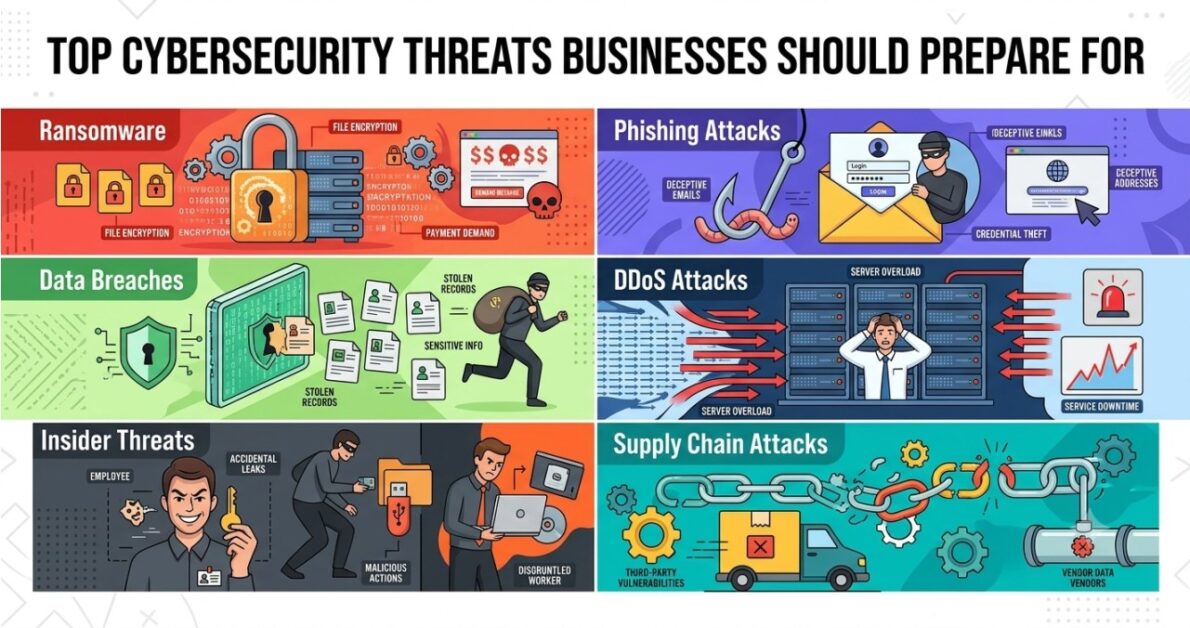
2. Ransomware Attacks: Ransomware can encrypt business data and disrupt essential systems. Regular backups, endpoint protection, network segmentation, and tested recovery plans help reduce the impact.
3. Phishing and Social Engineering: Fraudulent emails, messages, and websites can trick employees into sharing credentials or transferring money. Multi-factor authentication (MFA) and regular security training are essential defenses.
4. Cloud Security Misconfigurations: Incorrect permissions, exposed storage, and weak access controls can leave cloud-based systems vulnerable. Businesses should review configurations, restrict access, and monitor cloud activity.
5. Data Breaches and Credential Theft: Stolen passwords and compromised accounts can expose confidential business and customer information. Strong authentication, password managers, encryption, and least-privilege access help protect sensitive data.
6. Third-Party and Supply Chain Attacks: Vendors, software dependencies, and external service providers can introduce security risks. Organizations should assess supplier security, maintain software updates, and monitor critical integrations.
7. Vulnerabilities in Websites and Applications: Outdated software, insecure APIs, and coding flaws can create opportunities for attackers. Regular patching, security testing, code reviews, and secure development practices help reduce these risks.
How Can Businesses Strengthen Cybersecurity?
Businesses should adopt a layered security approach that includes multi-factor authentication, regular software updates, secure data backups, employee training, endpoint protection, access management, and continuous monitoring. A documented incident response plan can also help organizations respond quickly and recover more effectively from attacks.
AI-powered security tools can support threat detection and investigation, but they should complement—not replace—established cybersecurity controls and expert oversight.
Conclusion
Cybersecurity threats continue to evolve, making proactive protection essential for every business. By identifying vulnerabilities, securing digital infrastructure, protecting sensitive data, and preparing for incidents, organizations can reduce risks and build greater digital resilience.
Tamesa Tech helps businesses strengthen their digital presence through secure software development, web and mobile application development, and AI-powered solutions. Building security into technology from the beginning helps businesses protect their operations while supporting long-term growth.